Evaluating Brugty: A Strategic Look at Bold, Retro Display Typography
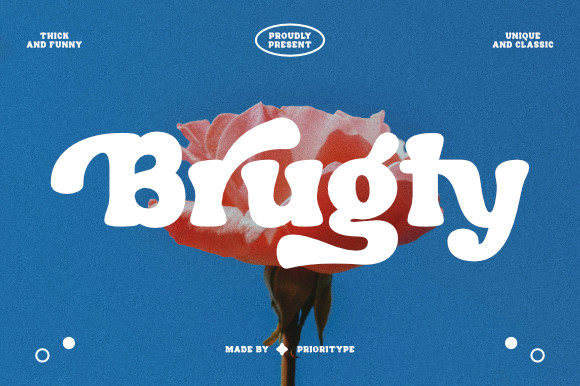
Selecting the right typeface is rarely just about aesthetics; it is a functional decision that dictates readability, brand voice, and user experience. When designers encounter Brugty, they are often presented with a specific set of characteristics: a cool, retro-styled, bold display font that projects strength and confidence. However, for professionals evaluating typography for commercial or creative projects, understanding the technical nuances—such as PUA encoding—and the stylistic implications is crucial before committing to a license.
This analysis explores where Brugty fits within the broader landscape of display fonts, examining its strengths, limitations, and ideal use cases. By comparing its approach to other retro and bold typographic solutions, we can determine when this font serves as a strategic asset and when alternative options might better serve your design goals.
The Core Identity of Brugty
At its foundation, Brugty is designed to be an attention-grabbing display font. It does not aim to be a neutral workhorse for body text; rather, it is engineered for impact. The aesthetic leans heavily into retro styling, evoking a sense of nostalgia while maintaining a modern, bold edge. This combination allows it to read as strong, confident, and dynamic. In visual communication, these traits are valuable for establishing immediate authority or injecting personality into static layouts.
What distinguishes Brugty from many generic retro fonts is its curated selection of glyphs and swashes. These decorative elements add tons of nostalgic character, allowing designers to create custom letterforms without needing to manually construct every variation. For brands seeking a distinct visual identity that feels both established and energetic, this level of detail can significantly reduce design time while increasing visual fidelity.
Technical Accessibility via PUA Encoding
A critical factor in font evaluation is accessibility and ease of use. Brugty utilizes PUA (Private Use Area) encoding. To understand why this matters, it is helpful to look at how traditional fonts handle special characters. Standard fonts rely on Unicode mapping, which assigns specific code points to standard letters and symbols. Special ligatures, swashes, or alternate glyphs often require complex OpenType features or manual substitution in design software.
PUA encoding places these additional glyphs in a reserved section of the Unicode space that is not assigned to standard characters. This means:
- Direct Access: Designers can access all glyphs and swashes directly through their keyboard or character map without relying on software-specific OpenType menus.
- Compatibility: Because these characters occupy unused code points, they tend to behave more predictably across different operating systems and older design applications that may not fully support advanced font features.
- Simplicity: The workflow becomes more linear. Instead of hunting for alternates in a panel, you simply select the desired glyph. This efficiency is particularly beneficial for high-volume production environments or designers who prefer a tactile, direct interaction with their tools.
While some purists argue that PUA encoding is a legacy technique, for many practical applications, it offers a robust and straightforward way to manage complex typographic assets. It removes friction from the creative process, allowing the focus to remain on composition rather than technical troubleshooting.
Comparative Analysis: Where Does Brugty Fit?
When evaluating display fonts, designers typically navigate between three main categories: clean sans-serifs, humanist serifs, and stylized display faces like Brugty. Understanding where Brugty sits relative to these categories helps clarify its value proposition.
Brugty vs. Minimalist Sans-Serifs
Minimalist sans-serif fonts are the default choice for corporate branding due to their neutrality and legibility. They are safe, scalable, and versatile. However, they often lack inherent character. Brugty offers a stark contrast to this approach. If a project requires a brand voice that feels approachable yet understated, a minimalist sans-serif is likely the superior choice. Conversely, if the goal is to evoke emotion, history, or boldness, Brugty provides a narrative layer that neutral fonts cannot achieve. The tradeoff here is versatility versus impact. Brugty is less versatile but far more impactful in specific contexts.
Brugty vs. Modern Script Fonts
Retro aesthetics often overlap with script fonts, which also seek to convey nostalgia and personal touch. However, scripts prioritize flow and cursive connection. Brugty, being a bold display font, prioritizes structure and weight. While scripts can feel elegant or whimsical, Brugty reads as grounded and substantial. For headlines that need to anchor a layout rather than float above it, Brugty’s structural integrity makes it a stronger candidate. Scripts may struggle with scalability at small sizes or in low-contrast environments, whereas Brugty’s bold nature ensures visibility even when scaled down or used against busy backgrounds.
Brugty vs. Other Retro Display Options
The market is saturated with "retro" fonts, ranging from vintage circus styles to 70s groovy types. What sets Brugty apart is its balance of cool modernity with retro roots. Some retro fonts lean too heavily into pastiche, feeling dated or costume-like. Brugty avoids this pitfall by maintaining a clean, confident geometry. It feels contemporary despite its nostalgic cues. This makes it suitable for modern digital interfaces, app icons, and web headers where screen resolution and loading times are considerations. Heavier, overly detailed retro fonts can suffer from pixelation or rendering issues on certain displays, but Brugty’s bold, simplified forms generally render well across devices.
Strategic Use Cases and Limitations
No single typeface is a universal solution. Brugty excels in specific scenarios but has clear limitations that designers must respect.
Ideal Applications
Due to its bold and dynamic nature, Brugty is best suited for:
- Headlines and Titles: Its primary strength lies in large-scale text. It commands attention in hero sections of websites, magazine covers, and poster designs.
- Brand Logos and Wordmarks: The unique glyphs and swashes allow for distinctive logo creation that stands out in crowded markets.
- Marketing Materials: Posters, flyers, and social media graphics benefit from the nostalgic character Brugty adds, helping to cut through visual noise.
- Product Packaging: For products targeting consumers who value heritage, craftsmanship, or bold personality, Brugty can enhance shelf appeal.
Limitations and Tradeoffs
Despite its strengths, Brugty is not appropriate for all design tasks. Its bold weight and decorative nature make it unsuitable for:
- Body Text: Using Brugty for paragraphs of text will cause eye strain and reduce readability. It lacks the subtle nuances required for prolonged reading.
- Subtle Branding: If a brand aims for quiet luxury, minimalism, or corporate seriousness, Brugty may be too loud and distracting.
- Small-Scale UI Elements: While it renders well, its complexity may become illegible at very small sizes, such as in navigation bars or footnotes.
Decision Factors for Designers
When deciding whether to incorporate Brugty into a project, consider the following factors to ensure it aligns with your objectives.
Project Tone and Audience
Does your target audience respond to bold, confident messaging? If your demographic skews toward younger adults or those appreciating vibrant, expressive design, Brugty’s energetic vibe is likely a good fit. For audiences preferring discretion and tradition, a more subdued typeface would be more effective.
Visual Hierarchy Needs
Assess the hierarchy of your layout. Brugty works best when it is allowed to dominate a focal point. If your design requires multiple levels of emphasis with varying degrees of subtlety, Brugty may compete too aggressively with secondary information. Pairing Brugty with a simple, neutral sans-serif can create a balanced contrast, leveraging Brugty’s strength for headlines while using the neutral font for supporting text.
Technical Workflow
Consider your team’s familiarity with PUA-encoded fonts. While easy to use, some collaborative workflows or automated publishing pipelines may have quirks with non-standard Unicode mappings. Ensure that your entire production chain, from design to development, can handle these characters seamlessly. If your team relies heavily on automated text replacement or strict coding standards, verify compatibility early in the process.
Conclusion: Is Brugty the Right Tool?
Typography is a tool for communication, and Brugty is a specialized instrument in that toolkit. It is not a general-purpose font, nor should it be treated as one. Its value lies in its ability to inject nostalgia, confidence, and dynamic energy into designs where impact is paramount.
If your project demands a bold statement, leverages large-scale display formats, and benefits from the ease of PUA-accessed glyphs, Brugty is a compelling choice. It offers a distinct alternative to sterile modernism and overly ornate scripts, carving out a niche that is both retro and resolutely contemporary. However, if your needs center on readability, subtlety, or extensive body copy, you should look elsewhere.
Ultimately, the decision comes down to alignment with your brand’s voice and the specific requirements of the layout. By understanding Brugty’s strengths and limitations, you can deploy it strategically to enhance your design’s effectiveness, ensuring that every typographic choice contributes meaningfully to the overall message.