Evaluating Labirt: A Bold, Textured Display Type for High-Impact Design
In the crowded landscape of digital typography, finding a font that commands attention without sacrificing legibility is a persistent challenge. Most display fonts fall into one of two categories: overly polished and sterile, or chaotic and unreadable. Labirt occupies a distinct middle ground. It is a bold, rough-textured yet quirky display font designed to make an immediate visual statement. For designers, marketers, and creative professionals seeking to inject personality and grit into their projects, Labirt offers a compelling alternative to standard sans-serifs.
This evaluation examines Labirt not merely as a decorative asset, but as a functional tool within a broader design workflow. We will explore its aesthetic characteristics, practical applications, technical performance, and suitability for various professional contexts. The goal is to determine whether this typeface provides genuine long-term value for libraries used by serious creators.
Defining the Aesthetic: Rough Texture Meets Quirky Structure
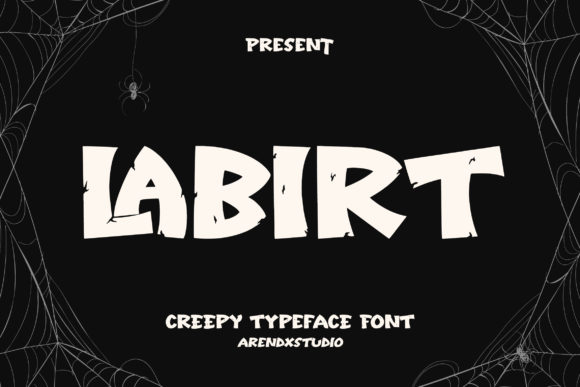
The primary characteristic of Labirt is its deliberate textural quality. Unlike clean geometric sans-serifs that prioritize neutrality, Labirt introduces a sense of tactility through its rough edges and irregular contours. This "roughness" is not a defect in rendering but a stylistic choice intended to evoke materials like stamped metal, worn paper, or hand-carved wood. When paired with its quirky structural variations—subtle shifts in stroke width and asymmetric details—the font avoids the monotony often associated with heavy-weight display faces.
This combination creates a voice that is both assertive and approachable. It does not shout aggressively; rather, it presents itself with character. For brands operating in industries such as craft brewing, artisanal food production, outdoor recreation, or independent publishing, this specific tonal balance is highly effective. It suggests authenticity and hands-on craftsmanship, qualities that resonate strongly with modern consumers who value transparency and origin stories.
However, the very features that give Labirt its charm also dictate its limitations. The textured nature of the glyphs means that fine details may disappear at smaller sizes or lower resolutions. This is a critical consideration for web designers who must ensure readability across diverse devices. Labirt is best suited for large-scale applications where its texture can be fully appreciated without compromising clarity.
Practical Applications and Use Cases
To understand the utility of Labirt, it is helpful to analyze how it performs in real-world scenarios. Its strength lies in high-impact display situations where hierarchy and mood are paramount.
- Brand Identity and Logos: For startups or small businesses aiming to stand out in saturated markets, Labirt provides instant differentiation. A logo set in Labirt conveys confidence and uniqueness. It works particularly well for names that are short and punchy, allowing the quirks of each letter to shine.
- Editorial Headlines: Magazines, blogs, and online publications often struggle to break the visual pattern of standard news feeds. Using Labirt for section headers or featured article titles can draw the eye effectively. The rough texture adds a layer of editorial depth, suggesting that the content within is substantive and grounded.
- Packaging Design: Product packaging benefits significantly from tactile typography. Whether for coffee bags, apparel tags, or cosmetic boxes, Labirt’s aesthetic aligns well with premium, handcrafted goods. It communicates quality through its imperfections, appealing to audiences who appreciate artisanal values.
- Social Media Graphics: In the fast-scrolling environment of social media, static images need to grab attention instantly. Labirt’s bold weight ensures visibility even at thumbnail size, provided the background contrast is managed correctly. It is an excellent choice for quote graphics, event announcements, and promotional banners.
While these examples highlight its strengths, it is important to note where Labirt may underperform. It is generally unsuitable for body copy, navigation menus, or any interface element requiring rapid scanning. The quirky elements can become distracting when reading extended passages, leading to cognitive fatigue. Therefore, its role should always be complementary, serving as an accent to more neutral, readable typefaces.
Technical Quality and Usability
From a technical standpoint, a display font must offer robust support for various languages and punctuation marks to be viable for global use. Labirt appears to be constructed with a focus on consistency within its own style. The kerning pairs have been adjusted to accommodate the irregular shapes of the letters, preventing awkward gaps or collisions that are common in custom display fonts.
One aspect of usability is versatility. Does the font come in multiple weights? If Labirt includes a range of weights—from light to black—it allows designers to create hierarchy while maintaining stylistic cohesion. Even if limited to a single bold weight, the inherent variation in the glyph shapes can provide enough visual interest for many projects. However, users should verify the specific offerings of their chosen license or download source.
File format compatibility is another practical concern. Modern workflows require OTF and TTF files, along with web-ready formats like WOFF2 for seamless integration into CSS. A reliable font library will provide these assets, ensuring that Labirt renders consistently across different browsers and operating systems. Additionally, checking for proper hinting instructions can improve screen rendering, although this is less critical for pure display usage compared to UI text.
Audience Fit and Strategic Value
Who benefits most from adding Labirt to their toolkit? The answer depends largely on the nature of the work being produced.
Freelance Graphic Designers will find Labirt valuable for client pitches and branding packages where a unique visual identity is required. It reduces the time spent searching for a custom solution, offering a ready-made aesthetic that feels bespoke.
Marketing Professionals can leverage Labirt for campaign materials that aim to disrupt traditional advertising norms. By using a font that feels organic and human, marketers can foster a stronger emotional connection with their audience. This is particularly relevant for campaigns targeting millennials and Gen Z, demographics that respond positively to authentic, non-corporate aesthetics.
Educators and Content Creators may use Labirt to make learning materials or blog posts more engaging. While body text remains standard, using Labirt for key concepts, definitions, or chapter breaks can help structure information visually, aiding retention and interest.
For corporate enterprises with strict brand guidelines emphasizing minimalism and uniformity, Labirt might be too expressive. It introduces a level of informality that may clash with established corporate identities. In such cases, it could serve as an exception for special initiatives or sub-brands, but not as a primary typeface.
Potential Limitations and Considerations
No font is without its drawbacks. With Labirt, the main limitation is its specificity. Because it has such a strong point of view, it can easily overpower other design elements if not used with restraint. Designers must be mindful of balance, pairing Labirt with simple, understated backgrounds and complementary colors to let the typography breathe.
Another consideration is trend sensitivity. Textured, grunge-style fonts often cycle in and out of fashion. While Labirt’s quirky nature gives it some longevity beyond fleeting trends, it is still tied to a specific aesthetic movement. Users should assess whether this style aligns with their long-term goals or if they prefer timeless, neutral options.
Finally, licensing costs and availability vary. Some platforms offer subscription models, while others charge per font. Evaluating the cost against the frequency of use is essential. For occasional users, buying individual licenses may be more economical than subscribing to a broad library. Conversely, for agencies producing high volumes of content, a subscription service might provide better access to Labirt and similar assets.
Conclusion
Labirt stands out as a distinctive addition to any typography collection. Its blend of bold presence, rough texture, and quirky character makes it an effective tool for creating memorable visual communications. While it is not a universal solution for all design needs, its niche application is powerful. When used strategically in headlines, logos, and packaging, it elevates the perceived quality and authenticity of a project.
For professionals who value impact and personality over neutrality, Labirt offers significant practical value. It bridges the gap between digital precision and analog charm, providing a versatile resource for those willing to experiment with expressive design. As with any typographic choice, success depends on thoughtful application and an understanding of the context in which it will appear. Used wisely, Labirt can transform ordinary layouts into compelling visual narratives.