Cookie
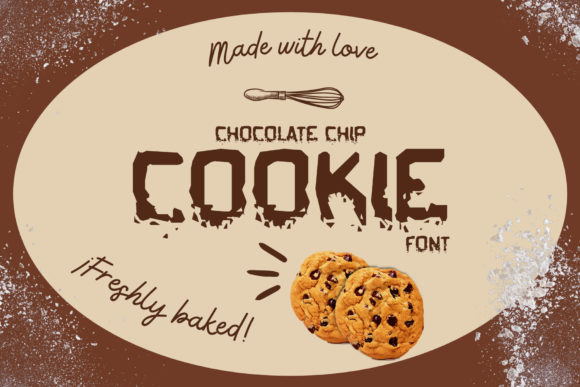
If you have ever stared at a blank canvas or a new project file and felt that standard, clean sans-serif fonts were just a bit too sterile, you are not alone. In the world of design, personality is often what separates a forgettable project from one that sticks in the mind. This is where Cookie steps in. It is an incredibly cool, brushed display font that resembles a crumbled cake—textured, organic, and undeniably charming. Adding this playful and uniquely designed typeface to your library allows you to employ it confidently in any creation that requires a whimsical touch.
But what does that actually mean for your next project? Is it just for baking blogs? Far from it. Understanding the specific texture and weight of Cookie helps you apply it with intention rather than just decoration. Let’s look at how this distinctive typeface can solve real creative problems across various aspects of life and business.
The Visual Identity of Comfort
At its core, Cookie is about warmth. The brushed style mimics the irregularities of hand-painted signs or the soft crumbs of a freshly baked treat. Unlike geometric fonts that feel rigid and corporate, Cookie feels approachable. It invites the viewer in. When you use this font, you are subconsciously signaling that your brand or message is friendly, accessible, and perhaps a little bit indulgent.
Consider the psychology of color and shape in typography. Sharp angles suggest efficiency and speed; rounded, textured letters like those in Cookie suggest comfort and nostalgia. This makes it a powerful tool for brands that want to humanize themselves. For instance, a small local bakery doesn’t just need to tell people they sell bread; they need to make them feel the smell of fresh ovens. Cookie achieves this through visual texture alone.
Real-World Applications for Creators and Entrepreneurs
You might be wondering where exactly this fits into your workflow. Here are several realistic scenarios where Cookie shines, moving beyond the obvious food industry applications.
Branding for Lifestyle Businesses
If you run a small business focused on wellness, home decor, or artisanal goods, your visual identity needs to reflect care and craftsmanship. A yoga studio, for example, might use sleek, minimalist fonts to convey discipline. However, a boutique candle maker or a handmade jewelry seller benefits more from a font that feels crafted by hand. Using Cookie for logos, packaging labels, or social media headers creates an immediate association with quality and personal touch.
Practical Tip: Pair Cookie with a very simple, thin sans-serif font for body text. The contrast between the heavy, textured display font and clean informational text ensures readability while maintaining that whimsical brand voice.
Event Design and Personal Celebrations
Weddings, birthdays, and baby showers are occasions defined by emotion. Traditional invitation templates can sometimes feel generic. By incorporating Cookie into digital invitations or printed stationery, you set a tone of celebration and joy. It works particularly well for themes that are rustic, vintage, or playful. Imagine a "Sweet Sixteen" party invite where the date is written in Cookie—it immediately tells the guest that this will be fun and relaxed, not stiff and formal.
- Wedding Signage: Use it for welcome signs or table numbers to add a touch of romance without being overly cursive.
- Party Favors: Labeling jars of homemade jam or bags of cookies becomes a gift in itself when the typography looks as good as the product.
Content Creation and Blogging
For bloggers and influencers, standing out in a crowded feed is essential. While most lifestyle bloggers stick to safe, legible fonts, using Cookie strategically can boost engagement. It serves as a visual hook. Instead of writing a caption that starts with "Here is my recipe," try highlighting key words in Cookie within your graphic designs. It breaks up the monotony of standard text blocks and draws the eye directly to the most important information.
This is especially effective for Pinterest graphics, where vertical images compete for attention. A bold, textured headline in Cookie stands out against the clean white backgrounds common on the platform.
Educational and Creative Projects
Education isn’t just for classrooms. Educators, parents, and hobbyists often create materials that need to capture attention quickly. If you are making flashcards for young children, a worksheet for a creative writing workshop, or a poster for a community event, readability must be balanced with interest.
Cookie is excellent for headings in educational materials because it captures attention without being distracting. It adds a layer of fun to learning. For example, a teacher creating a bulletin board for "Spelling Bee Week" could use Cookie for the main title to make the event feel exciting rather than academic. Similarly, hobbyists making scrapbooks or memory books can use it to label photos with a personal, handwritten feel.
What to Consider Before You Apply
While Cookie is versatile, it is a display font. That means it is designed to be seen, not read in long paragraphs. There are practical considerations to keep in mind to ensure your designs remain professional and effective.
Readability vs. Style
The biggest mistake users make with textured fonts is overusing them. Because Cookie has a complex surface (the "crumbled" effect), it can become difficult to read if used for sentences longer than a few words. Always reserve it for titles, headlines, short phrases, or single words. If you need to convey detailed instructions or legal disclaimers, switch to a neutral, high-contrast font.
Context Matters
Not every audience responds well to whimsy. If you are designing a financial report, a medical pamphlet, or a technical manual, Cookie would likely undermine the seriousness of the content. These fields require trust and clarity above all else. Save Cookie for contexts where playfulness is an asset, such as marketing campaigns, entertainment, arts, and leisure.
Color and Background Interaction
The brushed texture of Cookie interacts heavily with background colors. On a busy or patterned background, the details of the font may get lost. To make Cookie pop, give it room to breathe. Use ample whitespace around the text. Additionally, consider the color palette. Warm tones like browns, tans, and creams enhance the "baked" aesthetic, while bright pastels can make it feel more modern and playful. Avoid low-contrast combinations, such as light gray Cookie on a white background, as the texture will vanish.
Integrating Cookie Into Your Workflow
Whether you are using Adobe Illustrator, Canva, or a basic word processor, integrating Cookie is straightforward. However, the skill lies in the pairing. As mentioned, balance is key. Think of Cookie as the spice in a dish—it enhances the flavor but shouldn't overpower the main ingredients.
Experiment with sizing. Sometimes, scaling Cookie down to a tiny size can create a unique texture effect, almost like a pattern. Other times, going large and bold emphasizes the crumbly edges, making it a powerful statement piece. Don’t be afraid to distort it slightly—stretching it horizontally can give it a retro, billboard feel, while stacking the letters vertically can create a striking logo mark.
Final Thoughts on Versatility
Cookie is more than just a font; it is a mood setter. It brings a sense of tactile reality to digital spaces, reminding us of the physical world of baking, crafting, and creating. By adding this playful and uniquely designed font to your library, you equip yourself with a tool that can instantly inject character into your work.
Use it confidently. Whether you are a freelancer looking to differentiate your portfolio, a small business owner wanting to build a warmer brand connection, or simply someone who wants to make their birthday card stand out, Cookie offers a solution that is both stylish and emotionally resonant. Just remember to respect its nature: let it lead the way in headlines, support it with clear body text, and watch how it transforms ordinary projects into memorable experiences.